

70 BPM · Free heart rate app for iPhone
70 BPM: see what caused every heart rate spike
70 BPM lays your Apple Health heart rate over your calendar, so every spike has a name: the standup, the client call, the commute home.
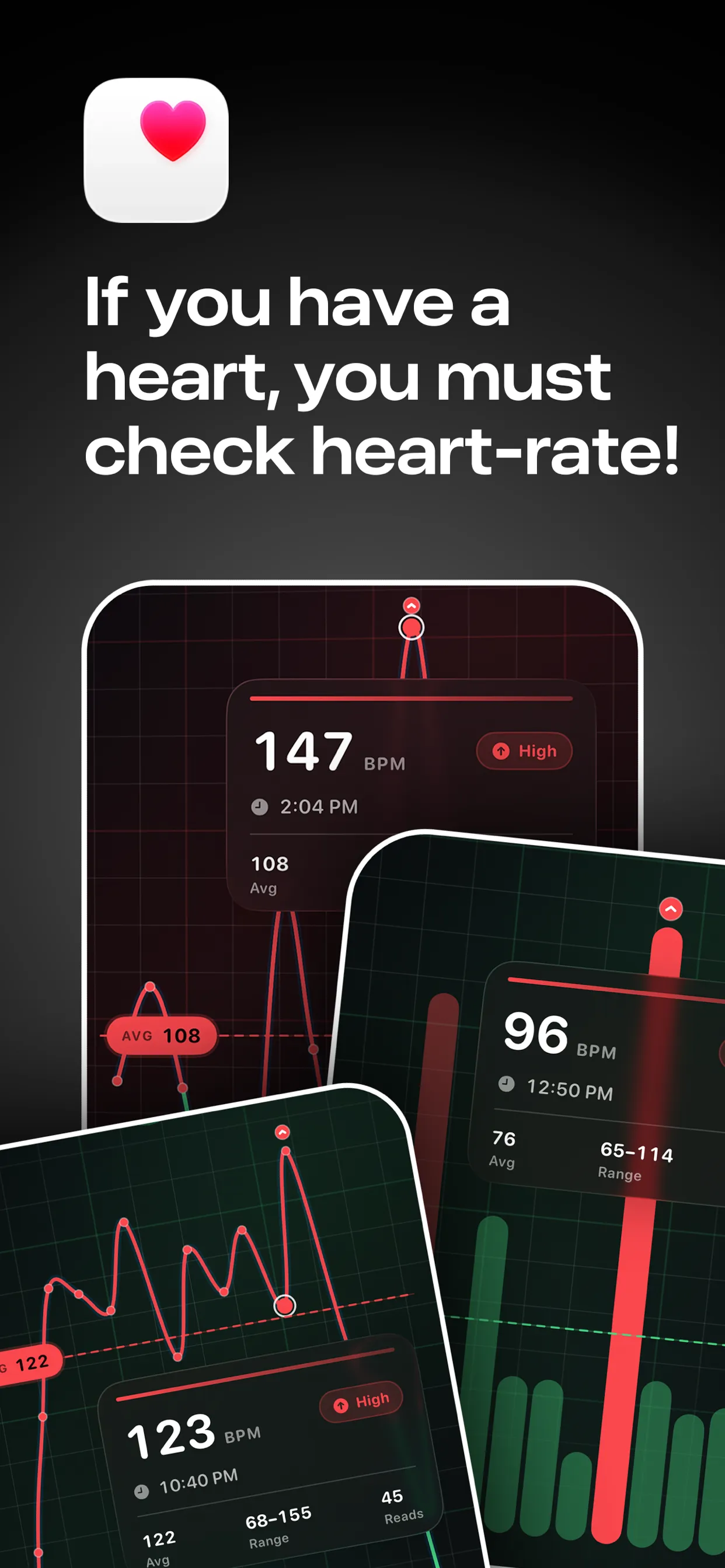
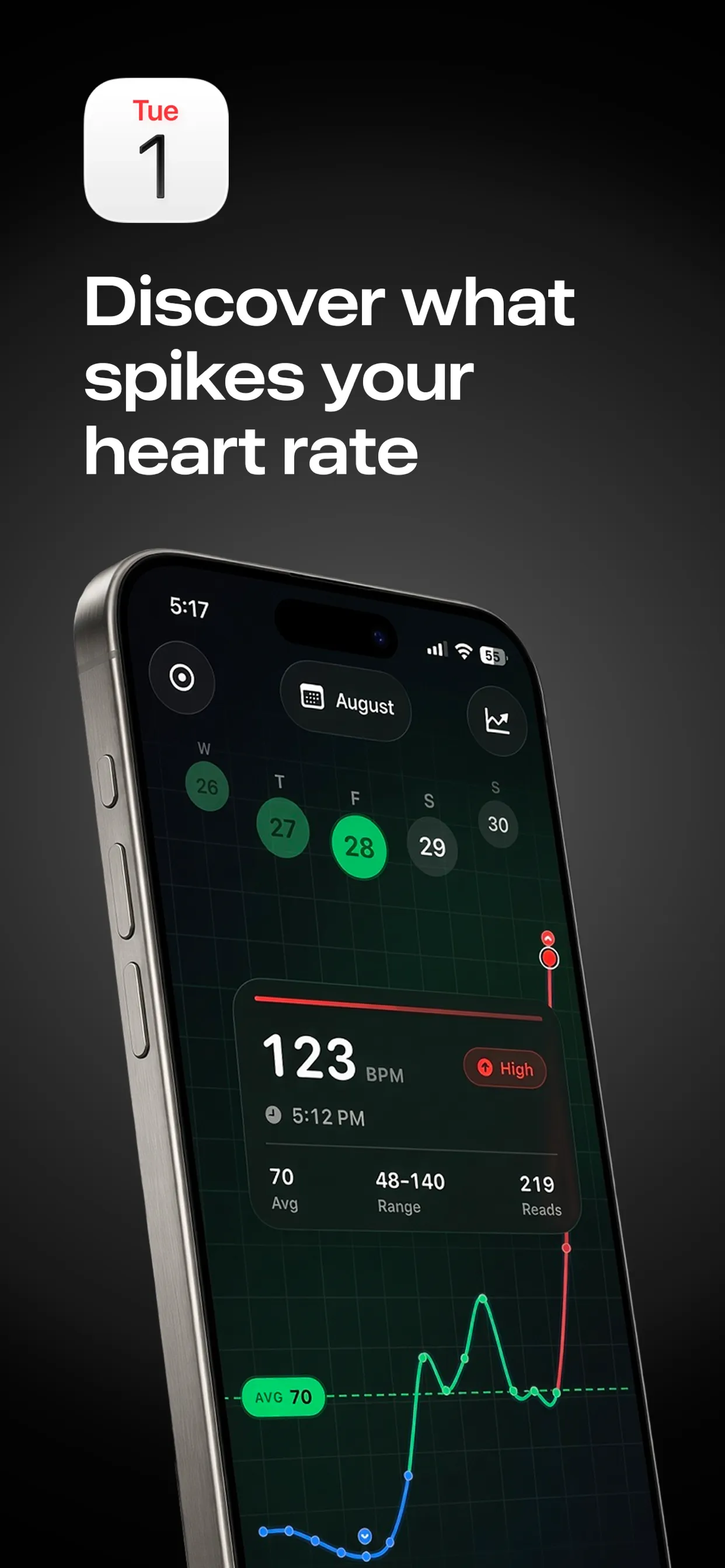

Free to download · Optional Pro in-app purchases · Reads from Apple Health · Stays on your iPhone
Key facts
- TrainingPeaks, quoting San Millán: for most endurance athletes Zone 2 is approximately 60 to 70% of maximum heart rate, an "all-day" effort you can sustain for a long time.
- The American Heart Association frames general exercise intensity as 50 to 85% of maximum heart rate, with maximum estimated as 220 minus age.
- San Millán recommends the talk test as a field cue and prefers lactate testing to locate the zone precisely. Percentages of maximum heart rate are only an approximation.
Is 130 heart rate zone 2?
Short answer: Possibly. 130 BPM is inside zone 2 for adults up to about 34, using 60 to 70% of the 220-minus-age estimate. For a 40-year-old that range is about 108 to 126, so 130 is just above it.
Check it with the talk test: if you can speak full sentences at 130 but not sing, it is probably zone 2 for you. Fitness, heat and caffeine all move the number.
What is a good zone 2 heart rate?
Short answer: A good zone 2 heart rate is the one where you can talk comfortably, usually around 60 to 70% of your maximum heart rate. Exercise physiologist Iñigo San Millán gives that range for most endurance athletes.
| Age | Estimated max | Zone 2 (60 to 70%) |
|---|---|---|
| 25 | 195 | 117 to 136 |
| 30 | 190 | 114 to 133 |
| 35 | 185 | 111 to 130 |
| 40 | 180 | 108 to 126 |
| 45 | 175 | 105 to 122 |
| 50 | 170 | 102 to 119 |
| 55 | 165 | 99 to 115 |
| 60 | 160 | 96 to 112 |
These use the rough 220-minus-age maximum, which can be well off for an individual, so treat them as a starting point.
Does heart rate zone 2 burn fat?
Short answer: Zone 2 uses a high share of fat for fuel, but that does not make it the best way to lose fat. In one study of trained men, the intensity with the highest fat burning rate was about 74% of maximum heart rate.
Fat burning peaks at moderate intensity (the "Fatmax" concept) and falls at harder efforts, though individuals vary a lot. Harder exercise burns more total calories per minute, so overall energy balance matters more for fat loss than the zone alone.
What is zone 2 heart rate?
Zones divide effort by heart rate. Zone 2 is the low-to-moderate band: breathing is steady, you can hold a conversation and the session feels almost too easy. It trains the aerobic base that supports every other kind of fitness, which is why runners and cyclists lean on it.
How do I find my zone 2 heart rate?
| Method | How | Caveat |
|---|---|---|
| Percent of max | About 60 to 70% of maximum heart rate | Formulas such as 220 minus age can be well off for an individual |
| Talk test | Speak full sentences, but not sing | Subjective, yet a recommended field cue |
| Lactate testing | Find the first lactate threshold and train just below it | Needs equipment and a tester |
| Watch zones | Use the zones your watch calculates | Based on estimates of your range |
Use the numbers as a starting point and let the talk test correct them. See the heart rate zones app guide for more on zones.
How to see it in 70 BPM
- Wear an Apple Watch (or another device that writes heart rate to Apple Health) as normal.
- Put the session in your calendar as an event, for example Zone 2 training, 07:00 to 08:00.
- Open 70 BPM and tap the event to see only the heart-rate readings inside it, next to the rest of your day.
70 BPM is free to download for iPhone and reads from Apple Health on your device; see how it handles privacy.
Afterwards, check three things in the event: how long you took to settle in, whether your heart rate drifted above your range, and how quickly it fell once you stopped.
What are common zone 2 mistakes?
- Going too hard. It should feel easy.
- Trusting a wrist sensor during hard intervals; a chest strap is steadier. See heart rate lifting weights.
- Heat, dehydration and caffeine push heart rate up at the same pace.
Not medical advice. 70 BPM shows heart-rate data your watch has already written to Apple Health. It is not a medical device and cannot diagnose or treat anything. In an emergency, call your local emergency number (911 in the US, 112 in the EU, 999 in the UK). If your heart rate is often high at rest, or you have chest pain, dizziness or breathlessness, see a doctor.