

70 BPM · Free heart rate app for iPhone
70 BPM: see what caused every heart rate spike
70 BPM lays your Apple Health heart rate over your calendar, so every spike has a name: the standup, the client call, the commute home.
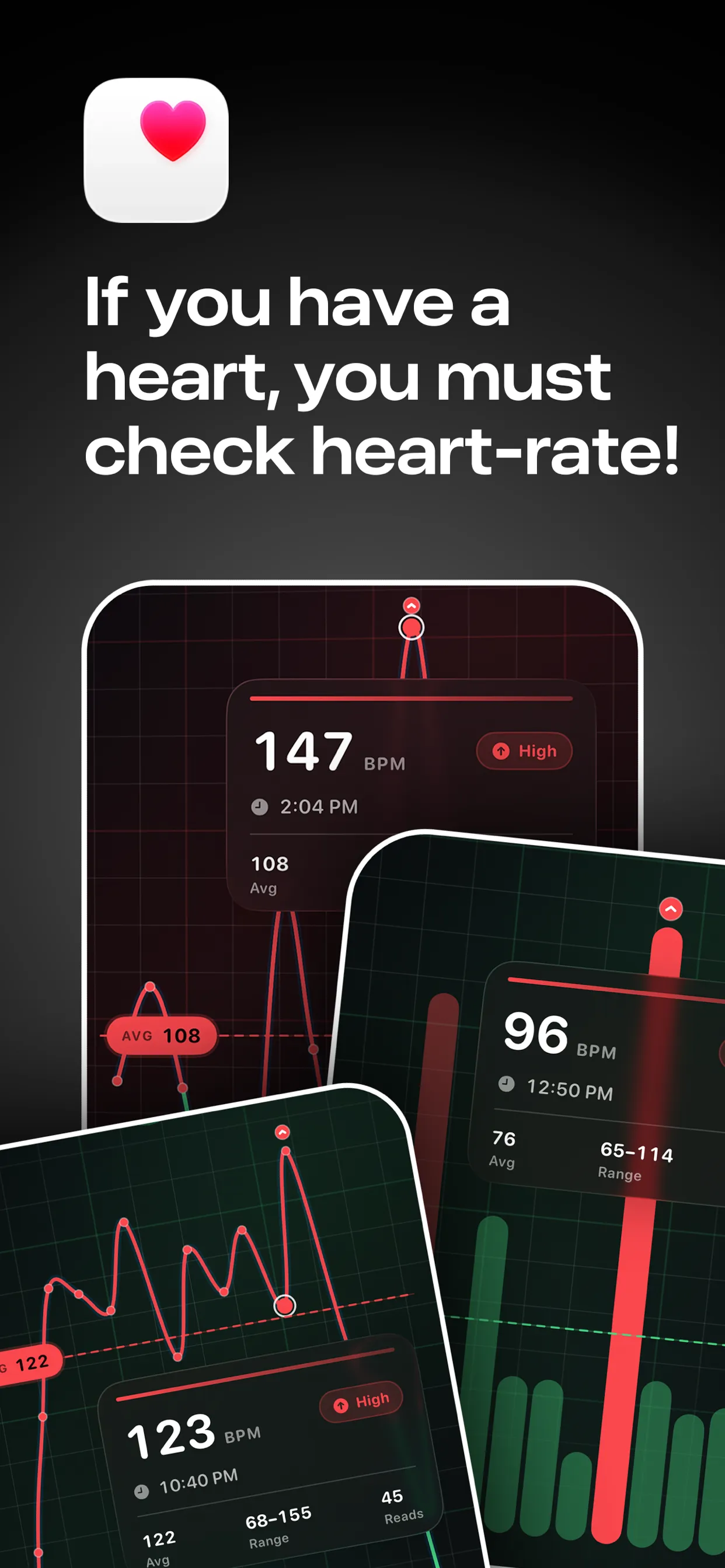
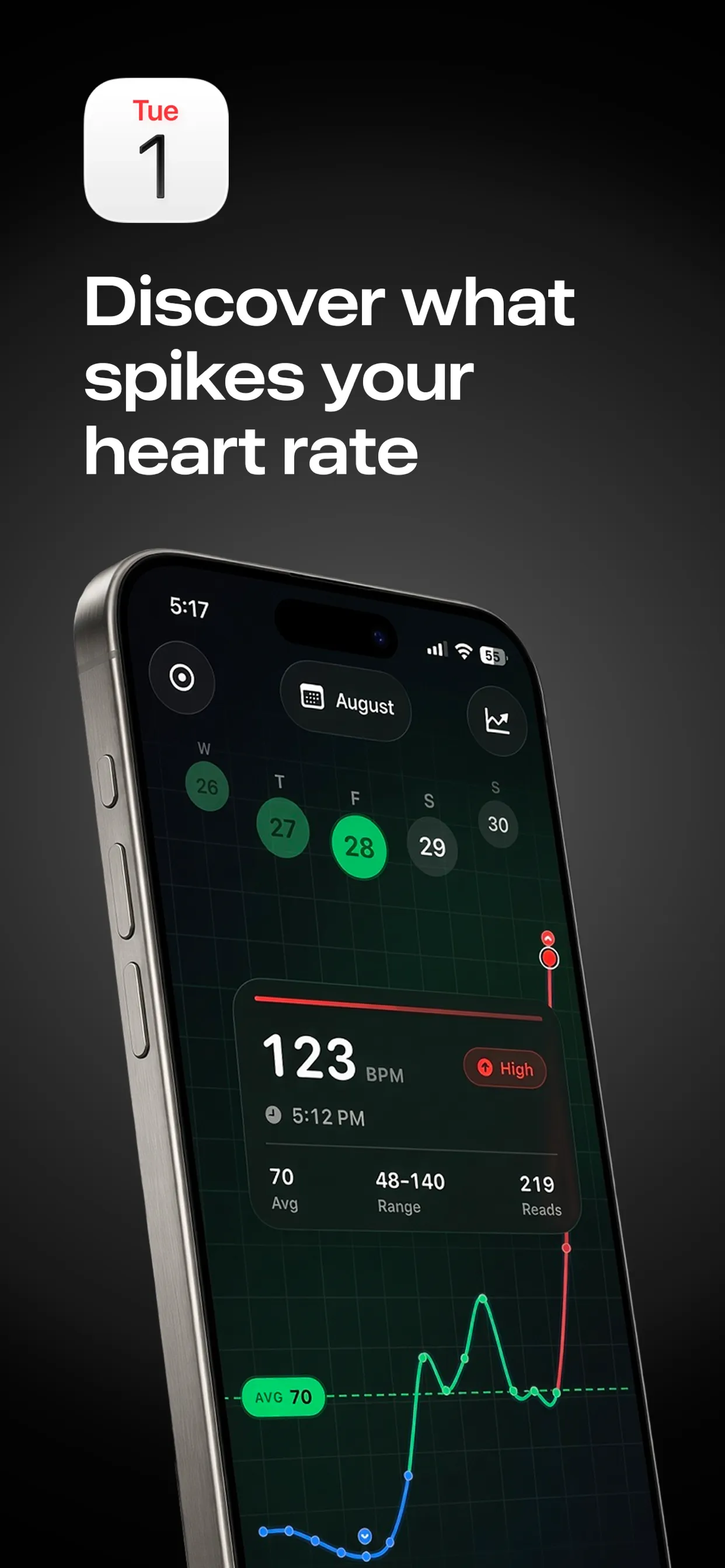

Free to download · Optional Pro in-app purchases · Reads from Apple Health · Stays on your iPhone
Key facts
- A 2019 study of 22 recreationally active adults (Bunn et al., International Journal of Exercise Science) used a Polar chest strap as the benchmark. The wrist watch tested (Mio Alpha) had a mean absolute percent error of 5.73% overall, and its accuracy was likely affected by wrist movement during high-intensity training; the earbud sensor had 3.14% error. It tested one older watch model, not Apple Watch.
- Optical wrist sensors read blood flow through the skin, so gripping a bar, flexing the wrist and tightening tendons can disturb the signal.
- For recovery between sets and general trends, wrist data is useful. For exact peaks, a chest strap is the steadier option.
Does heart rate go up when lifting weights?
Short answer: Yes. Heart rate rises with each hard set, partly because heavy lifting and breath-holding briefly raise pressure, then falls during rest. Expect a sawtooth pattern rather than a steady climb.
The heavier the set and the shorter the rest, the higher the peaks and the baseline between sets.
How high should heart rate be during strength training?
Short answer: There is no standard target. Heart rate is a weak guide for lifting because load, muscle mass and rest time affect it, so peaks vary widely. Use it to judge recovery between sets, not to hit a number.
For context, the American Heart Association frames general exercise intensity as 50 to 85% of maximum heart rate. That is cardio guidance, not a strength-training prescription. Effort rating and rest times are better lifting guides.
Why does heart rate jump when lifting weights?
Heavy sets demand a burst of blood flow, and holding your breath during a lift briefly raises pressure and heart rate. Between sets the rate falls, and how fast it falls is a rough sign of recovery. Long rests on heavy days and short rests on light days will give different shapes.
How do I read heart rate lifting weights data?
| You see | It often means |
|---|---|
| Sharp peaks, quick drops | Short hard sets with good recovery |
| Rising baseline across the session | Incomplete rest, heat or accumulating fatigue |
| Flat lines or jagged noise | Sensor trouble rather than a real change |
Why do wrist sensors struggle with weights?
Movement and grip disturb the optical signal. A snug watch worn a finger-width above the wrist bone helps, and a chest strap that writes to Apple Health is steadier. Because 70 BPM reads whatever Apple Health holds, it works with strap data too.
How to see it in 70 BPM
- Wear an Apple Watch (or another device that writes heart rate to Apple Health) as normal.
- Put the workout in your calendar as an event, for example Upper body, 18:00 to 19:00.
- Open 70 BPM and tap the event to see only the heart-rate readings inside it, next to the rest of your day.
70 BPM is free to download for iPhone and reads from Apple Health on your device; see how it handles privacy.
Look at the peaks, the drops between sets and the recovery afterwards. For easy cardio days, see zone 2 heart rate.
Not medical advice. 70 BPM shows heart-rate data your watch has already written to Apple Health. It is not a medical device and cannot diagnose or treat anything. In an emergency, call your local emergency number (911 in the US, 112 in the EU, 999 in the UK). If your heart rate is often high at rest, or you have chest pain, dizziness or breathlessness, see a doctor.