

70 BPM · Free heart rate app for iPhone
70 BPM: see what caused every heart rate spike
70 BPM lays your Apple Health heart rate over your calendar, so every spike has a name: the standup, the client call, the commute home.
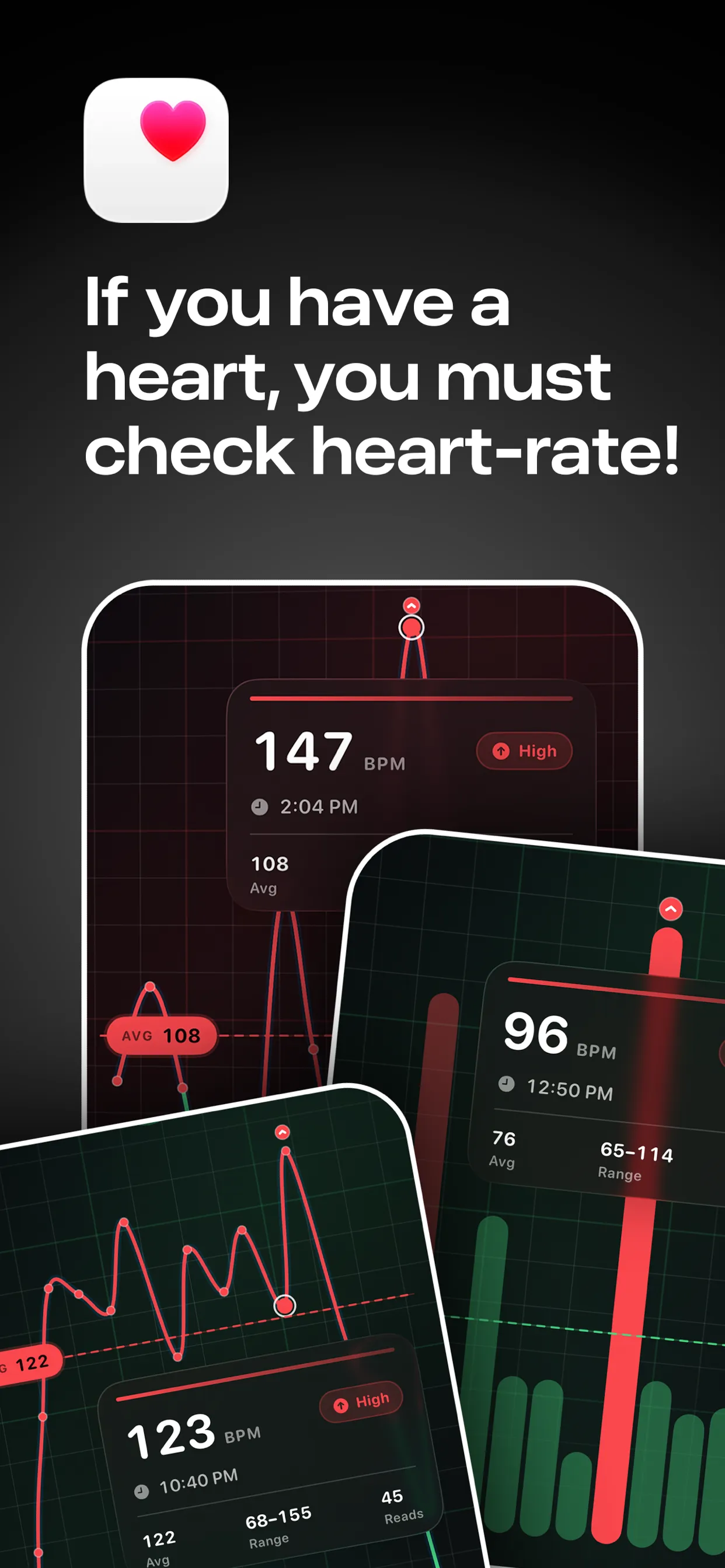
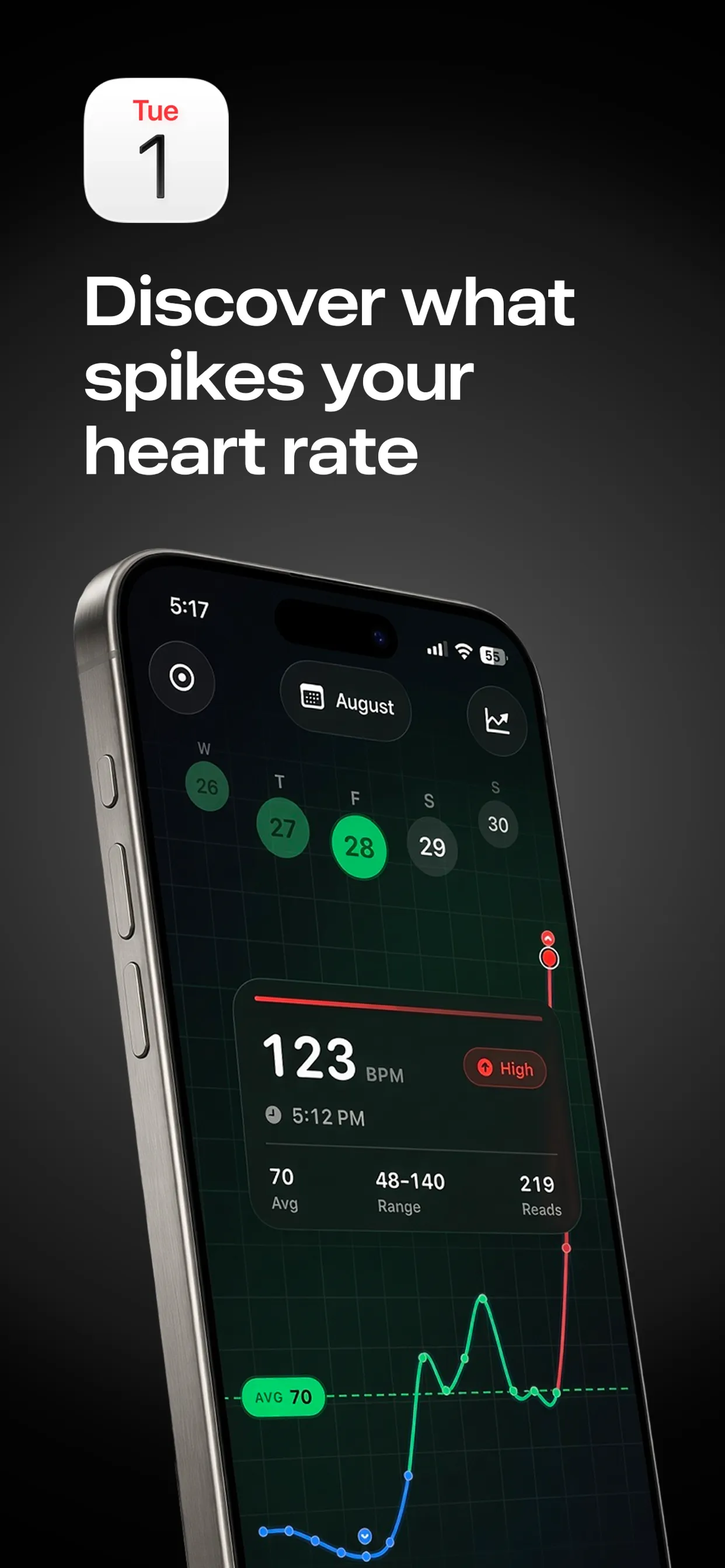

Free to download · Optional Pro in-app purchases · Reads from Apple Health · Stays on your iPhone
Key facts
- PLoS ONE (2008), 211 male competitive runners, including 57 half marathoners: average percentage of maximum heart rate fell systematically as race distance rose, and faster and slower runners showed similar percentages within the same distance, especially up to the half marathon.
- The commonly quoted coaching range for a half marathon is roughly 85 to 91% of maximum heart rate. That is guidance, not a measured average from a controlled study.
- The American Heart Association's 220 minus age formula is only an estimate of maximum heart rate; real maximums differ widely, so use a tested or observed maximum if you have one.
What is average heart rate for half marathon runners?
It depends on your own maximum and on pacing. Using 85 to 91% of the 220-minus-age estimate gives these rough race-average ranges:
| Age | Estimated max | Half marathon range (85 to 91%) |
|---|---|---|
| 25 | 195 | 166 to 177 BPM |
| 35 | 185 | 157 to 168 BPM |
| 45 | 175 | 149 to 159 BPM |
| 55 | 165 | 140 to 150 BPM |
Treat the table as a starting point. Your own best recent long-run and race data beat any formula.
Why does heart rate run high on race day?
- Adrenaline and nerves at the start line, a pattern coaches describe often.
- Crowds, warm weather and a faster start than you trained at.
- Caffeine and short sleep the night before. See heart rate after coffee.
No controlled study of race-day versus training heart rate at the same pace turned up in the research for this page, so these causes are coaching experience, not proven effects.
How should I pace by heart rate on race day?
- Start a little below the range for the first kilometres, when nerves inflate the number.
- Settle into your range by feel and effort, not the watch alone.
- Hold steady through the middle; push in the last quarter if you have fuel left.
Wrist sensors can lag or misread at pace, so a chest strap that writes to Apple Health is steadier. Warm-up and easy running are covered in zone 2 heart rate.
How do I review my race in 70 BPM?
- Add the race to your calendar, for example Half marathon, 08:00 to 10:00, and add Warm-up and Cool-down if you like.
- Run with your watch or strap as normal.
- Open the event in 70 BPM to see heart rate across the start, middle and finish, and how fast it fell afterwards. Compare against a long training run.
Not medical advice. 70 BPM shows heart-rate data your watch has already written to Apple Health. It is not a medical device and cannot diagnose or treat anything. In an emergency, call your local emergency number (911 in the US, 112 in the EU, 999 in the UK). If your heart rate is often high at rest, or you have chest pain, dizziness or breathlessness, see a doctor.