

70 BPM · Free heart rate app for iPhone
70 BPM: see what caused every heart rate spike
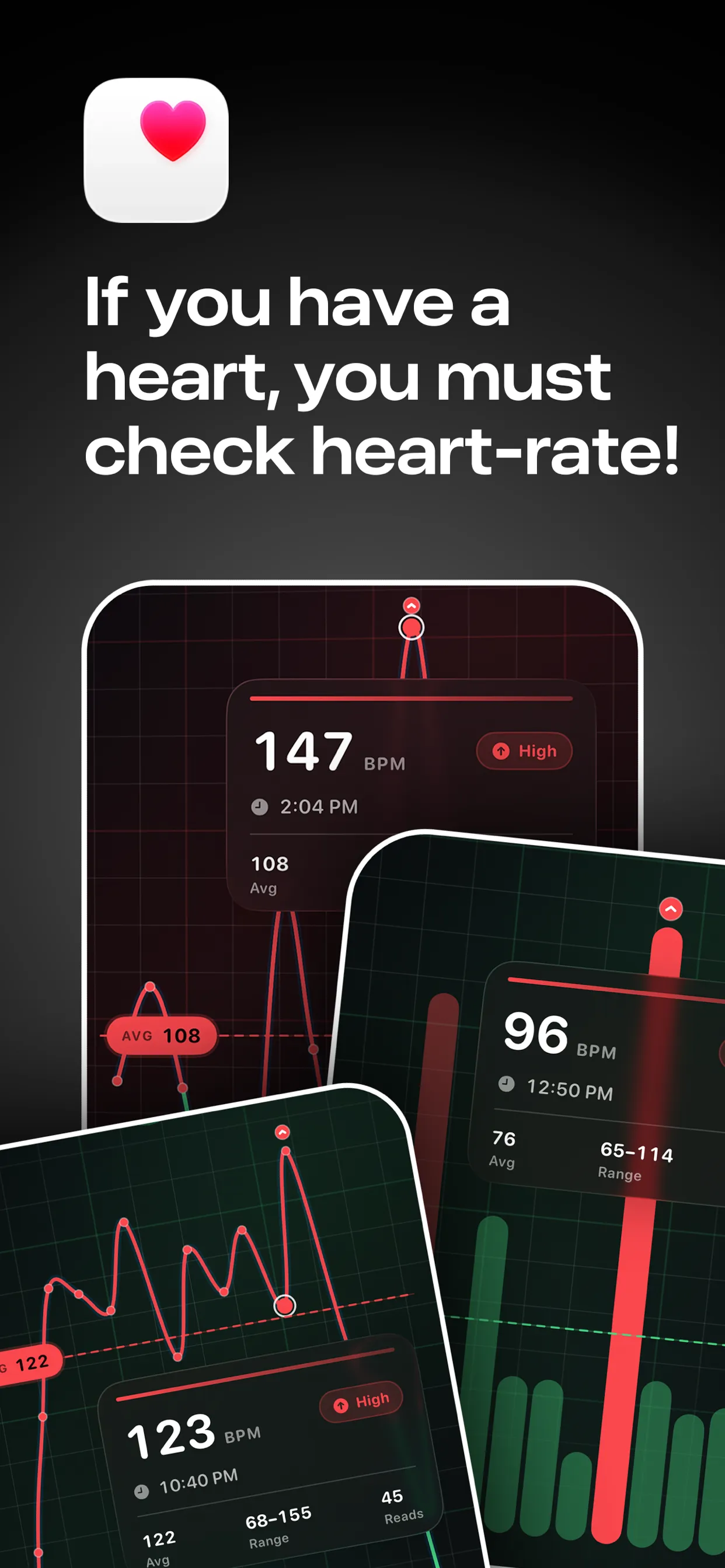
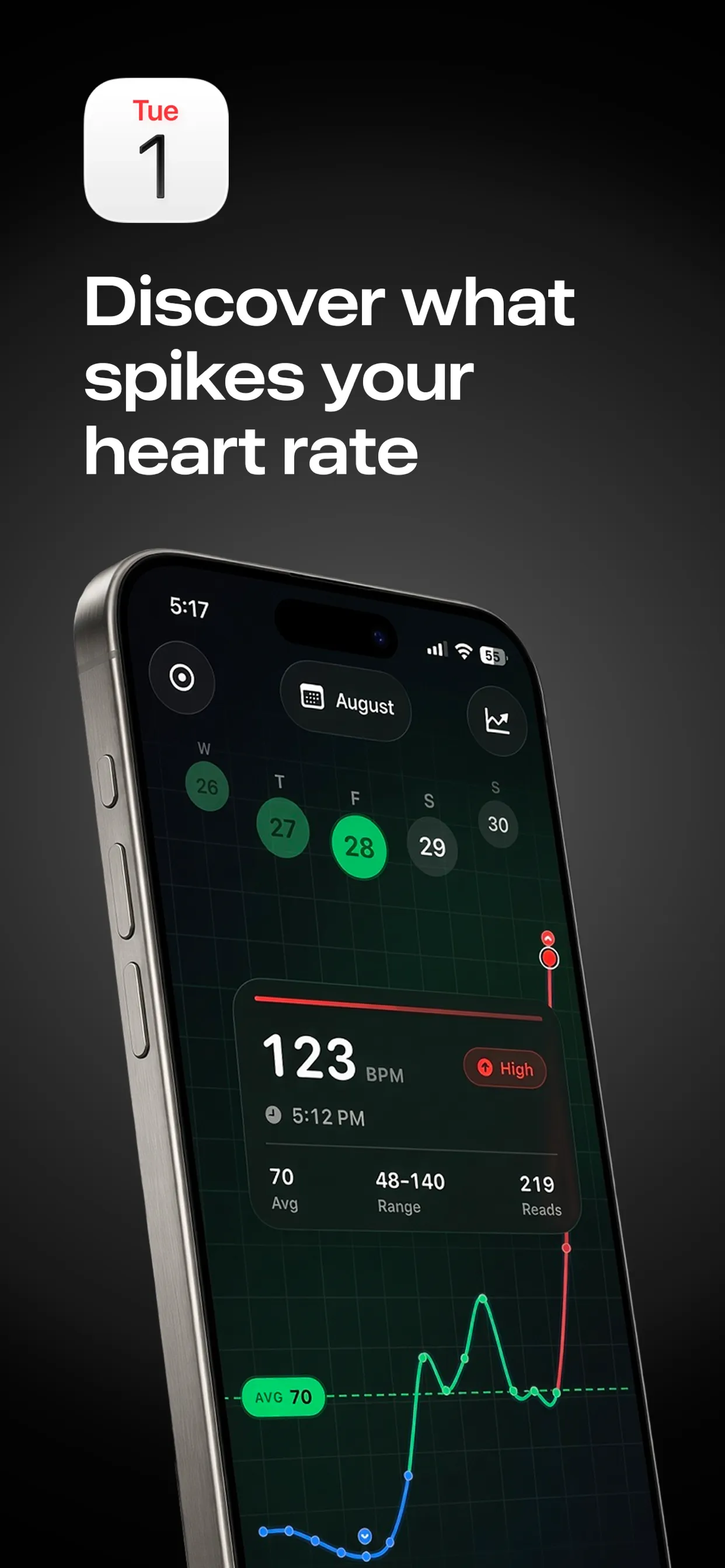
70 BPM lays your Apple Health heart rate over your calendar, so every spike has a name: the standup, the client call, the commute home.

Free to download · Optional Pro in-app purchases · Reads from Apple Health · Stays on your iPhone
Key facts
- In a cohort of 303 people reported in the Anatolian Journal of Cardiology, those with white coat hypertension, a rise in readings in clinical settings, had a higher heart rate than those with sustained hypertension (85 vs 76 BPM) and higher anxiety scores.
- The Mayo Clinic describes 60 to 100 BPM as a normal adult resting range and recommends seeing a clinician if it is regularly above 100.
- Hospital monitors are clinical devices read by trained staff. A wrist watch is not, and should never replace them.
Why is my heart rate higher at the doctors?
Short answer: Usually anxiety. Being in a clinical setting triggers stress hormones that speed the heart, an effect often called the white coat effect. Illness, rushing to the appointment and caffeine can add to it.
Sit quietly for a few minutes before the reading, breathe slowly, and ask for a repeat measurement. A calm reading at home, such as one logged in 70 BPM around the appointment, gives your doctor useful context.
Can white coat syndrome raise heart rate?
Short answer: Yes. White coat syndrome is mainly known for raising blood pressure in a clinic, and anxiety raises heart rate with it. In a cohort of 303 people, those with white coat hypertension had a higher heart rate (85 vs 76 BPM) and higher anxiety scores.
The American Heart Association says about 15 to 30 percent of people with raised office blood pressure have white coat hypertension. Doctors usually confirm it with home readings over a week.
Why is my heart rate high in hospital?
- The condition itself: fever, infection, pain, dehydration or blood loss all raise heart rate.
- Anxiety: waiting rooms, procedures and unfamiliar surroundings trigger the stress response, which research links to higher readings in clinical settings.
- Medication and drips: some drugs raise heart rate, others lower it.
- Poor sleep: noise and interruptions leave the body less rested.
Should I trust my watch or the hospital monitor?
The hospital monitor. If your watch shows something different, or an alert worries you, tell a nurse and do not adjust anything yourself. The same applies to visitors: a changing number on a loved one's watch is not a diagnosis.
How can I use heart rate data around a hospital visit?
For planned appointments, add them to your calendar (Cardiology appointment, 10:00). Afterwards 70 BPM shows how your heart rate behaved in the waiting room, during the visit and during recovery at home. Some people show that picture to their doctor as extra context. It adds to the conversation but does not replace tests.
What if my heart rate stays high after I come home?
After a stay, a resting rate that stays elevated for days, or that climbs, is worth raising with your doctor. See elevated resting heart rate for what to look for.
Not medical advice. A phone or watch is not a substitute for hospital monitoring. 70 BPM is not a medical device and cannot diagnose or treat anything. Always follow your care team. In an emergency, call your local emergency number (911 in the US, 112 in the EU, 999 in the UK).