

70 BPM · Free heart rate app for iPhone
70 BPM: see what caused every heart rate spike
70 BPM lays your Apple Health heart rate over your calendar, so every spike has a name: the standup, the client call, the commute home.
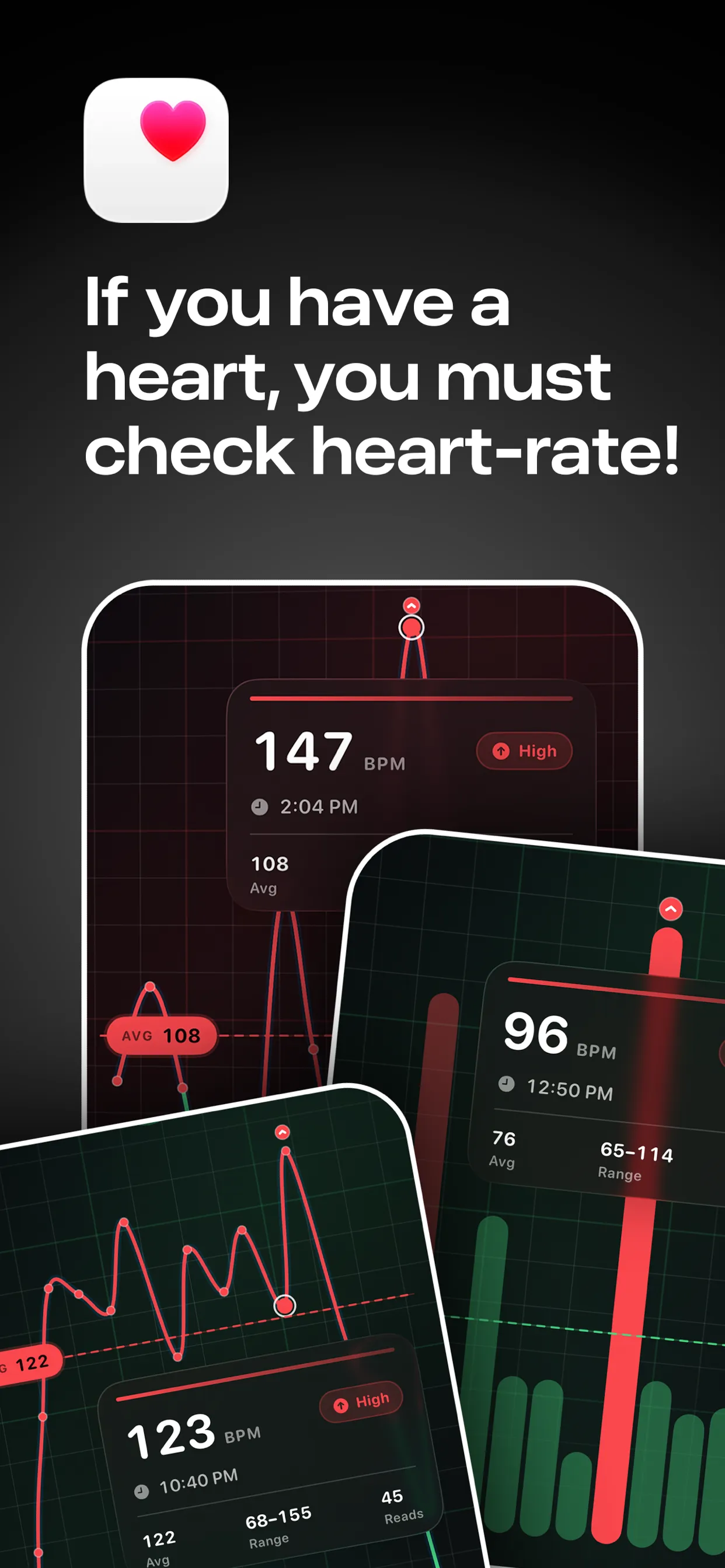
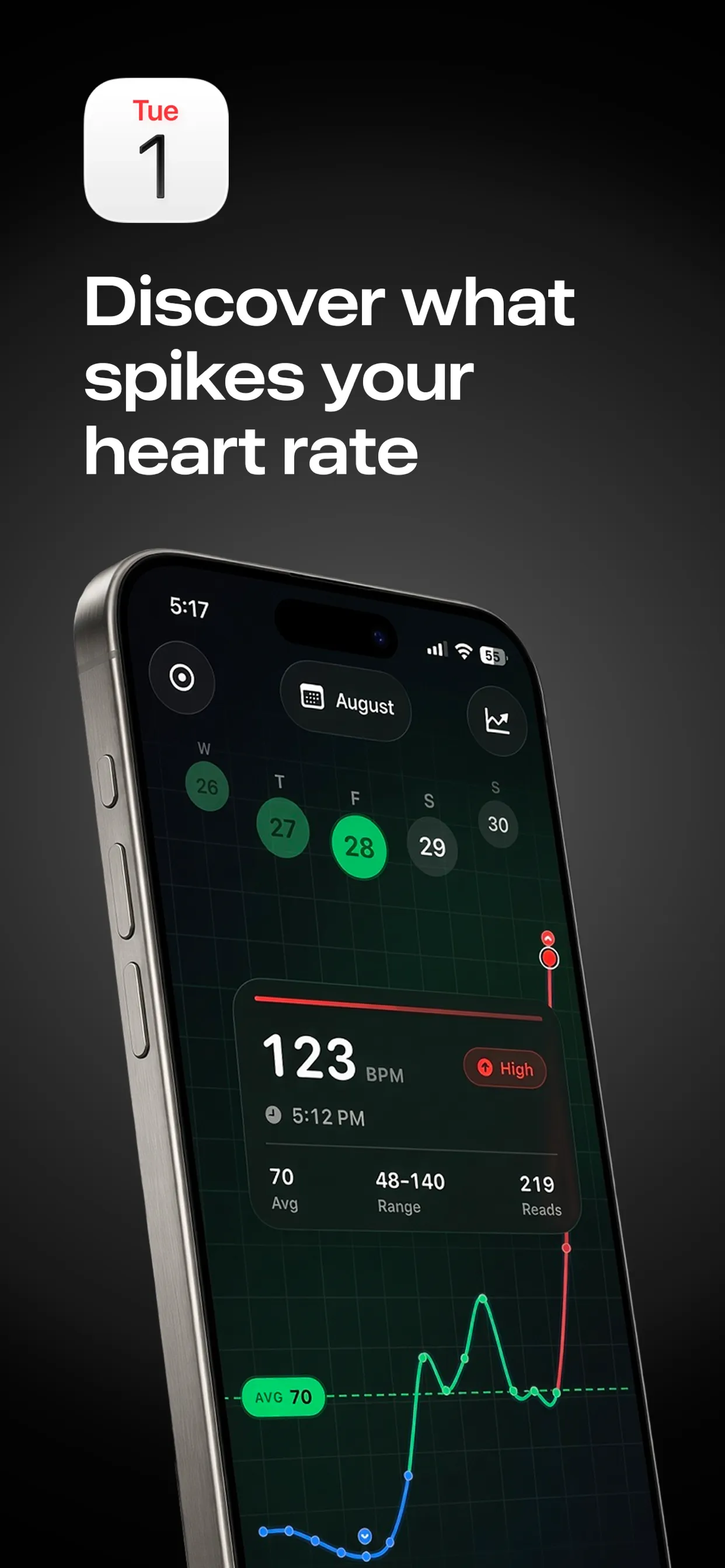

Free to download · Optional Pro in-app purchases · Reads from Apple Health · Stays on your iPhone
Key facts
- Mayo Clinic: a normal adult resting heart rate is 60 to 100 BPM; see a clinician if it is regularly above 100, or if you are not a trained athlete and it is often below 60.
- Copenhagen Male Study (2,798 healthy middle-aged men, 16-year follow-up): an elevated resting heart rate was a risk factor for mortality independent of physical fitness, leisure-time activity and other major cardiovascular risk factors. It is an association in one cohort; results differ across populations and ages.
- Apple Watch can notify you when your heart rate remains above a chosen threshold after at least 10 minutes of inactivity.
What counts as an elevated resting heart rate?
Above 100 BPM at rest is the usual line for a high rate in adults, and athletes can sit far lower than 60. For prevention, your own baseline is the real reference. A rise of ten beats over your usual number for several days in a row is a prompt to look at sleep, stress, alcohol and training before assuming anything more.
What causes an elevated resting heart rate?
- Short or poor sleep and ongoing stress.
- Alcohol the night before (heart rate after alcohol), caffeine, dehydration or heat.
- Fighting off an illness, sometimes before symptoms show.
- Overtraining or too little recovery.
- Some medications, and sometimes thyroid or heart conditions, which is why persistence matters.
How can I spot an elevated resting heart rate early?
- Learn your baseline. Two weeks of calm mornings gives you your normal.
- Tag what moves it. Add late nights, big events, hard training and drinking to your calendar; 70 BPM lines them up with the trend.
- Change what you can. Protect sleep, space out hard sessions, reduce alcohol, drink water.
- Escalate persistence. A trend that stays up for weeks without an explanation goes to your doctor.
Prevention here means noticing early and acting on causes. It does not mean an app can prevent a condition. See also heart rate during sleep and heart rate in hospital.
When should I not wait?
Chest pain, fainting, severe breathlessness or a very fast, irregular heartbeat needs urgent medical help, not trend-watching.
Not medical advice. 70 BPM shows heart-rate data your watch has already written to Apple Health. It is not a medical device and cannot diagnose or treat anything. In an emergency, call your local emergency number (911 in the US, 112 in the EU, 999 in the UK). If your heart rate is often high at rest, or you have chest pain, dizziness or breathlessness, see a doctor.